According to Executive Director Matt Zitello, Hawaii Technology Academy's (HTA) strategic vision—its Hōkūpaʻa—centers on innovation, creativity, and preparing students for a world that values adaptability over memorization. So when the statewide public charter school began looking for a partner that could strengthen its hands-on curriculum, NuVuX was a natural fit.
"Our model already emphasizes place-based learning, career-based learning, and student-driven inquiry," Zitello said. "NuVuX gave us a design thinking methodology to layer on top of that—a way to formalize the creative process and push students (and teachers) to iterate, prototype, and present their ideas with rigor."
When NuVuX first partnered with Hawaii Technology Academy in 2020, the focus was on bringing the studio experience directly to students. Today, that partnership has evolved into something much bigger: helping teachers themselves learn how to design and facilitate studio-based learning that reaches students across an entire school system.
That evolution reflects NuVuX's larger mission. Rather than simply delivering projects to students, NuVuX works alongside educators to build the confidence, skills, and mindset needed to create meaningful, project-based learning long after the partnership begins.
"We were already committed to doing school differently before 2020," Zitello said. "We needed partners who understood that innovation isn't just about technology—it's about how students think, design, and solve problems."
Over the past five years, HTA has shifted from relying on NuVuX staff to lead studios toward empowering its own teachers through professional learning cohorts. Educators first experience the studio model as learners themselves before developing original studio units tailored to their own classrooms and subject areas. Throughout the process, they receive coaching, feedback, and practical support from the NuVuX team.
"The combination of professional learning, practical examples, and personalized coaching helped build teacher confidence and capacity," said Traci Sullivan, HTA's Statewide Director of Academics. "It made it possible to gradually expand studio-based learning across the school."
That investment in teachers has begun to ripple throughout the curriculum. What started as a dedicated NuVuX program has inspired studios in algebra, scientific illustration, expository writing, and other disciplines—all centered on the same design process of investigating, creating, receiving feedback, iterating, and communicating ideas.
"What excites me most is that design thinking is no longer confined to NuVu studios," Sullivan said. "It is beginning to influence how teachers approach learning across the curriculum."
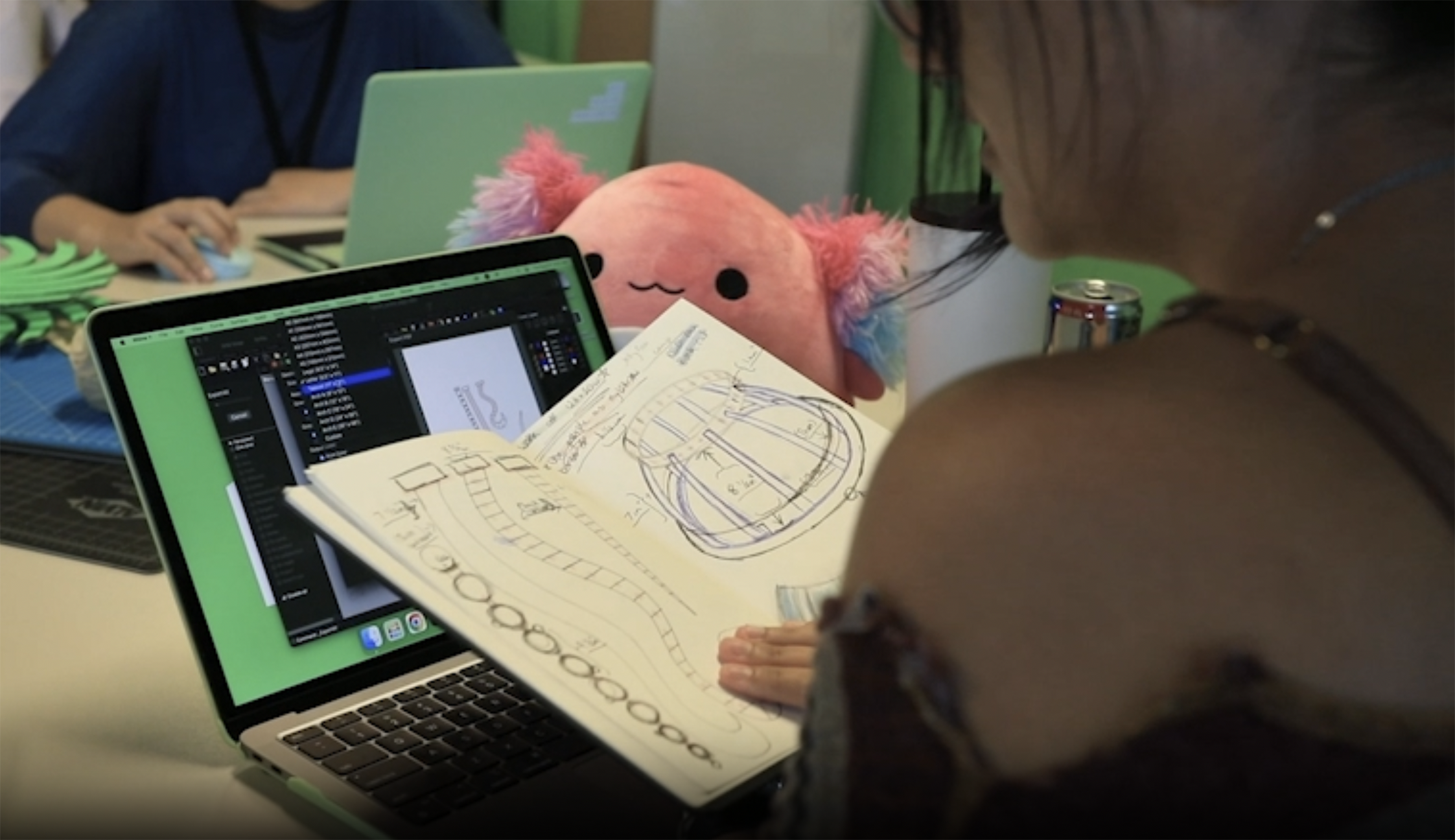
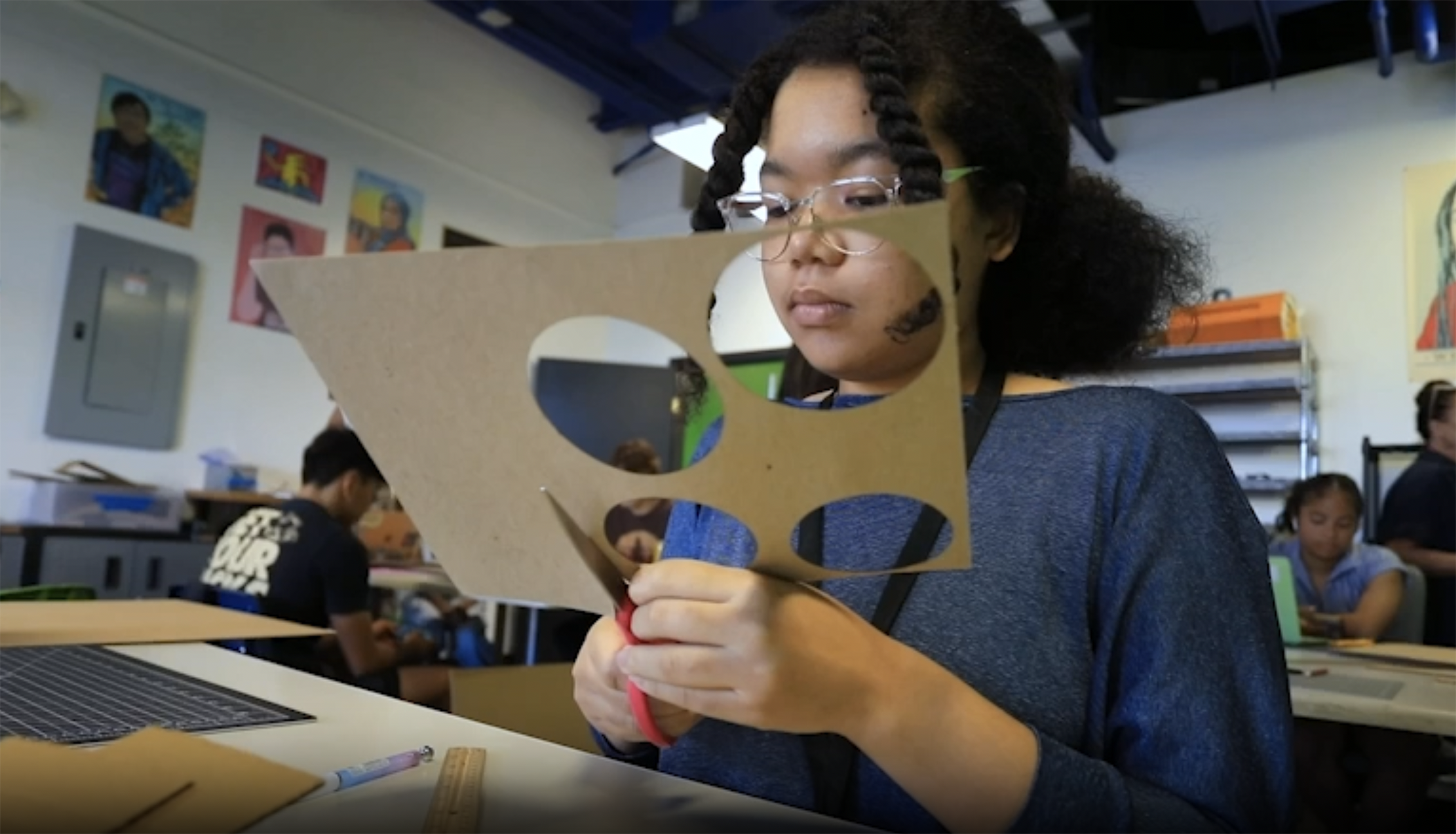
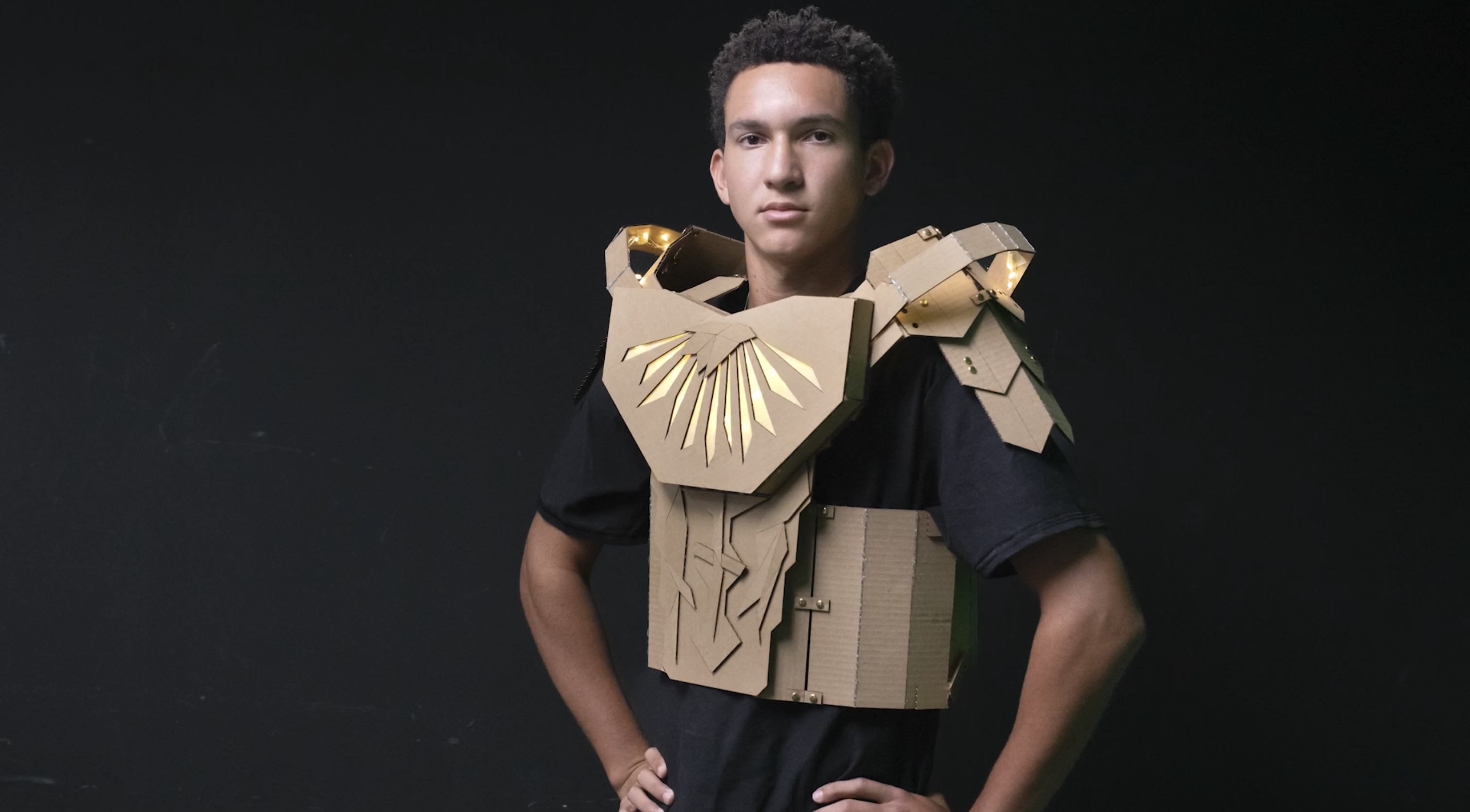
For students, the shift is just as transformative. "It depends where we are in the studio flow," said Mariah Tuttle, HTA's Design Teacher and Studio Lead. "At first, students often find it a bit disorienting. One day they're building cardboard structures. The next they're debating ideas, heading into the field, or collaborating on prototypes. Eventually the classroom becomes an open studio where students are teaching each other, solving problems together, and creating."
That transition isn't always comfortable. "We really focus on embracing personal interests, treating failure as a learning tool, and using individualized feedback rather than traditional grades," Tuttle said. "Ultimately, most students describe feeling free and empowered by the experience."
For senior Kaella Lauro, NuVuX changed more than the way she approached one class.
"NuVuX has allowed me to experience what it means to design and how to present myself and my ideas authentically," she said. "This mindset now shapes how I approach all my classes."
Another student, Kingston Collman, credits the program with helping him develop a skill he never expected.
"The most valuable skill I've learned in NuVuX is presenting," he said. "The structure of NuVuX presentations is so different and prepares you so much better for what a professional showcase of ideas looks like."
For Zitello, those individual stories point to something larger. "Our goal is to embed design thinking into how HTA teachers teach—across campuses and across grade levels," he said. "If NuVu stays a single program on a single campus, it's a great elective. But it doesn't change the culture of a school."
That's why the teacher cohort model matters. It creates the conditions for schools to sustain and expand studio-based learning on their own, with NuVuX serving as a coach and long-term partner rather than simply a program provider.
"Start with your teachers, not just your students," Zitello said. "The studio model is powerful for kids, but the real transformation happens when teachers internalize the design thinking process and begin reimagining how they approach their own courses."
As HTA prepares to expand this work across multiple campuses and islands, the partnership continues to grow—not by adding more NuVuX classrooms, but by equipping more educators to create them.
Because lasting change doesn't happen when one classroom adopts a new project. It happens when an entire school learns a new way to teach.
You can learn more about the HTA and NuVuX partnership here: https://hi.myhta.org/nuvux/