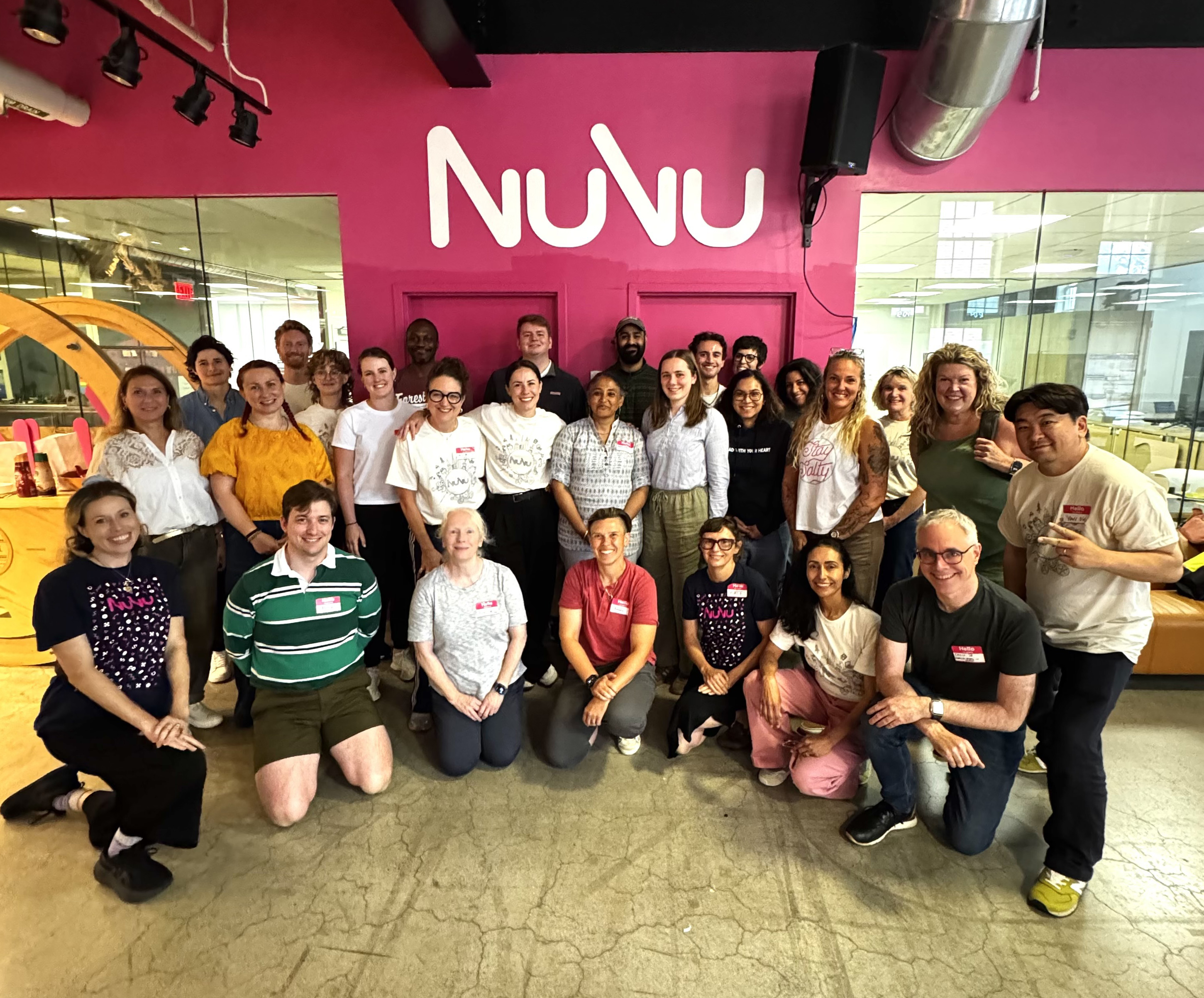
There are few careers where professional development is as important—or as challenging—as teaching. So where do educators go to reignite their creativity? They head to the NuVuX Innovation Camp for Educators (NICE).
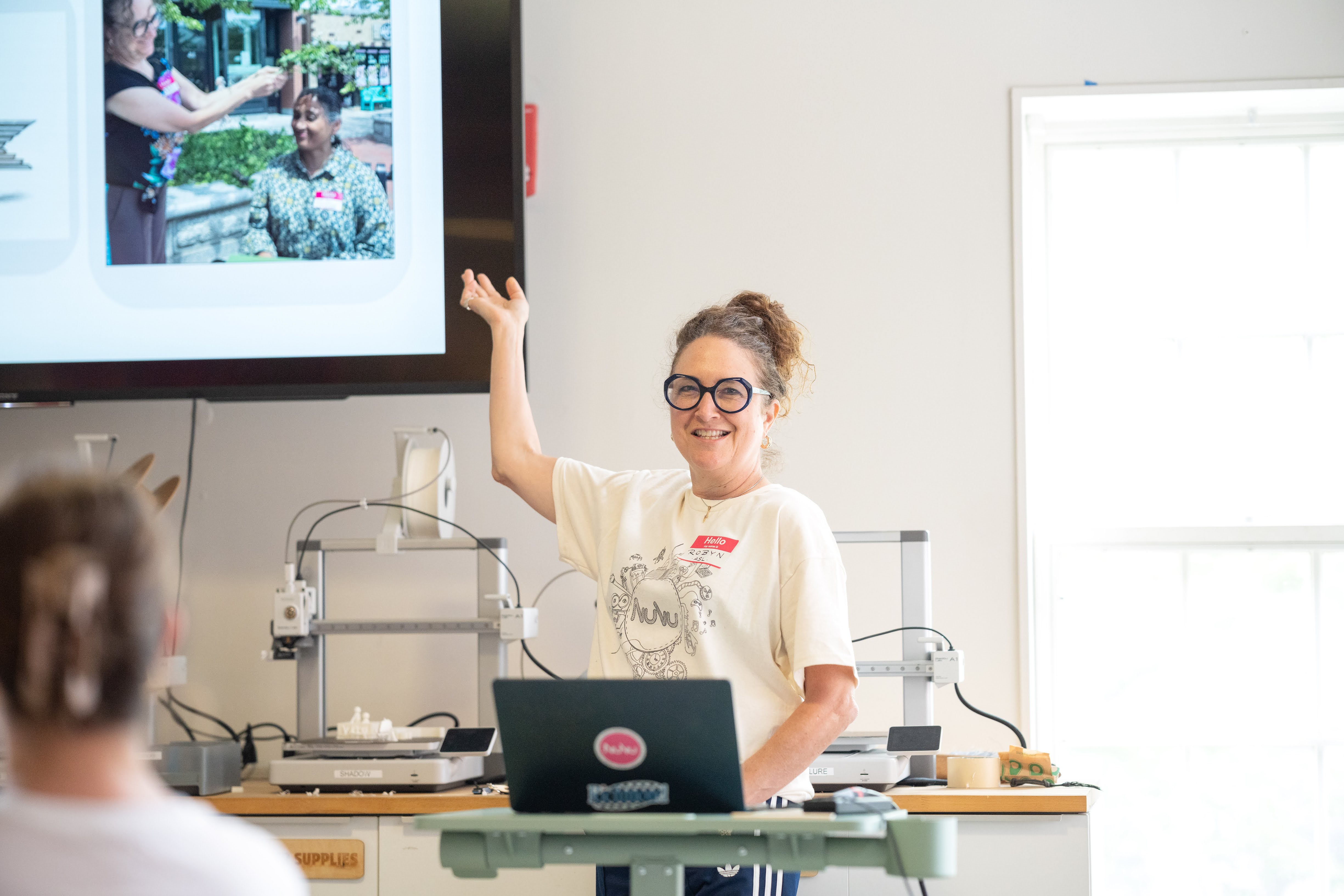
On June 30, educators from around the world gathered at the NuVu campus in Cambridge, Massachusetts, for the 13th annual camp. Led by Kate James, NuVuX's Head of Product Experience, Joselyn MacDonald, Head of Teacher Experience, and co-founder and Chief Creative Officer Saba Ghole, NICE flips the traditional classroom dynamic. Instead of learning solely about teaching practices, K–12 educators and organizational leaders become students again, learning NuVu’s design process through the creation of a hands-on project.
Experiencing NuVu's studio model and design process firsthand, participants tackle a collaborative, hands-on design challenge while learning how to bring this creative mindset back to their own classrooms, schools, and organizations.
In the Beginning
When NuVu school was first launched, Saba explains that she and the team quickly realized that transforming the way students learn also requires transforming the teaching experience for educators.
"Hands-on learning requires a holistic approach, and we wanted to create a dedicated space where educators could experience and discuss the studio-based learning model in a supportive environment," Saba shares.
"Thirteen years later, we're still running our annual Innovation Camp, and it continues to grow. That tells us the education community is embracing hands-on learning more than ever before."
School Days
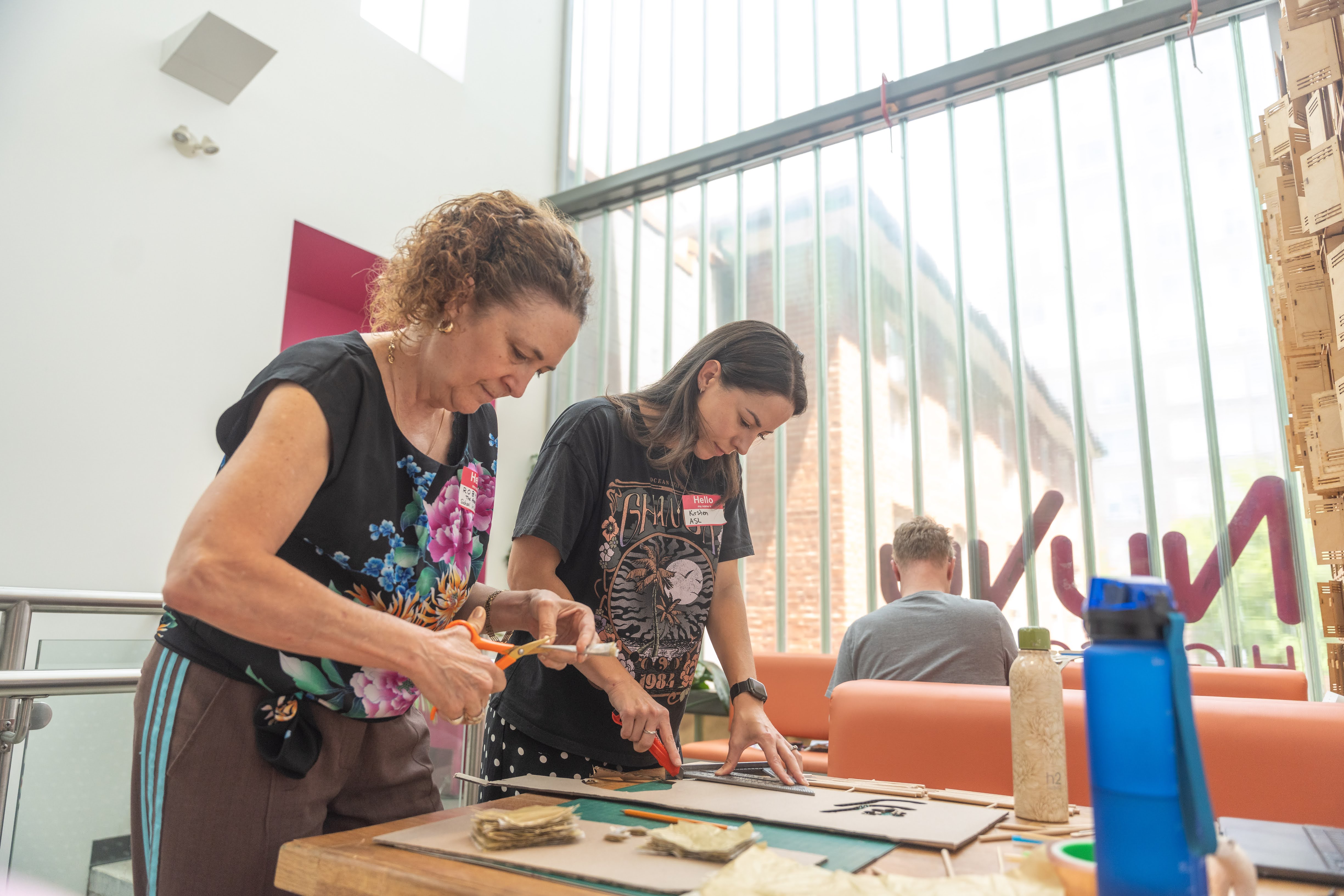
Before joining NuVuX, Kate James spent years in the classroom herself. She remembers the feeling that often accompanied traditional professional development days: overscheduled agendas, passive learning, and little connection to the realities of teaching.
NICE was intentionally designed to be the opposite.
"We have designed NICE to be highly experiential and inspiring," says Kate. "We want teachers to experience hands-on design work—to feel that energized and engaged mode of learning."
"NICE is a high-impact adventure," adds Joselyn. "You'll feel like a student again and leave with a toolbox of ideas and practices to take back to your school."
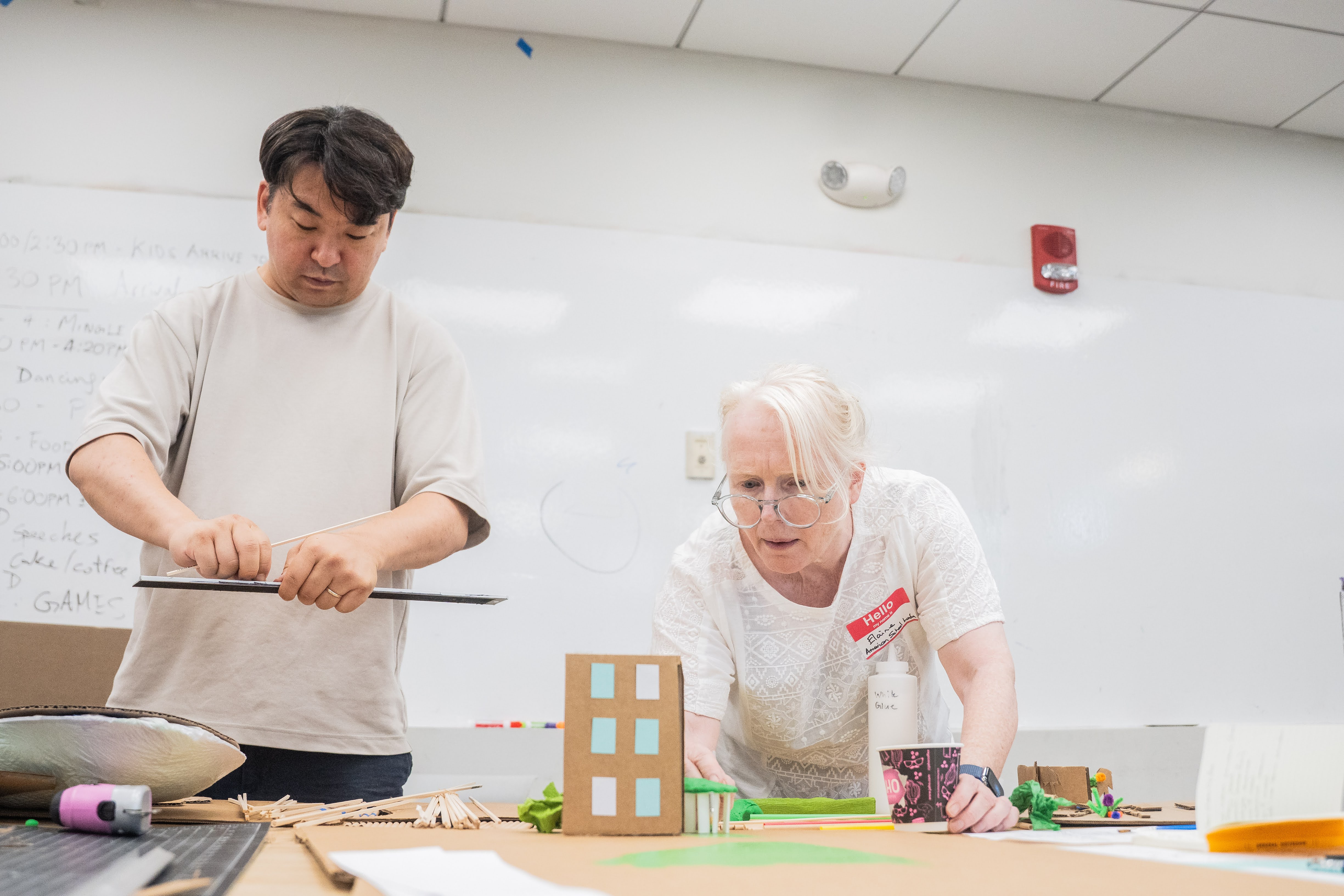
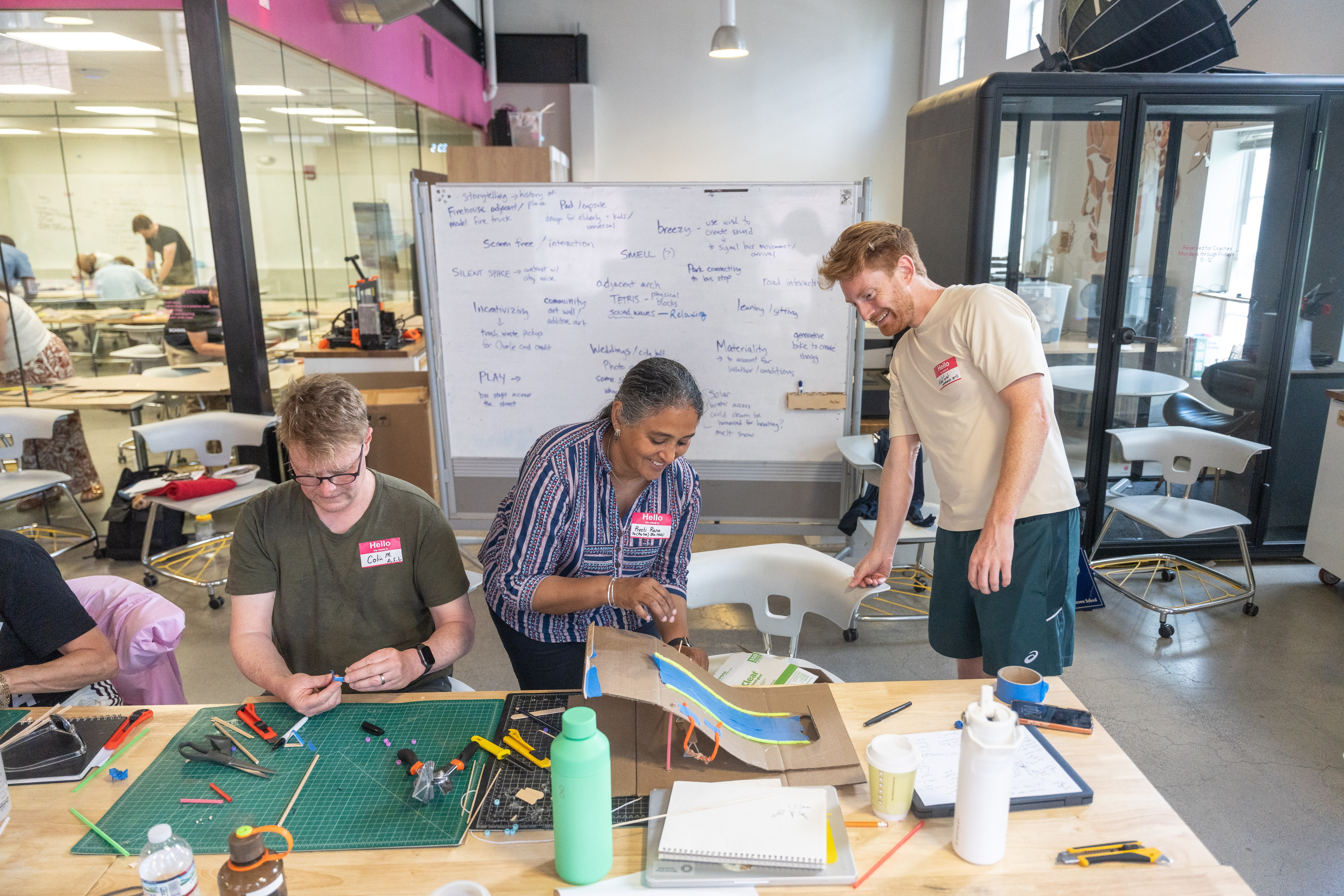
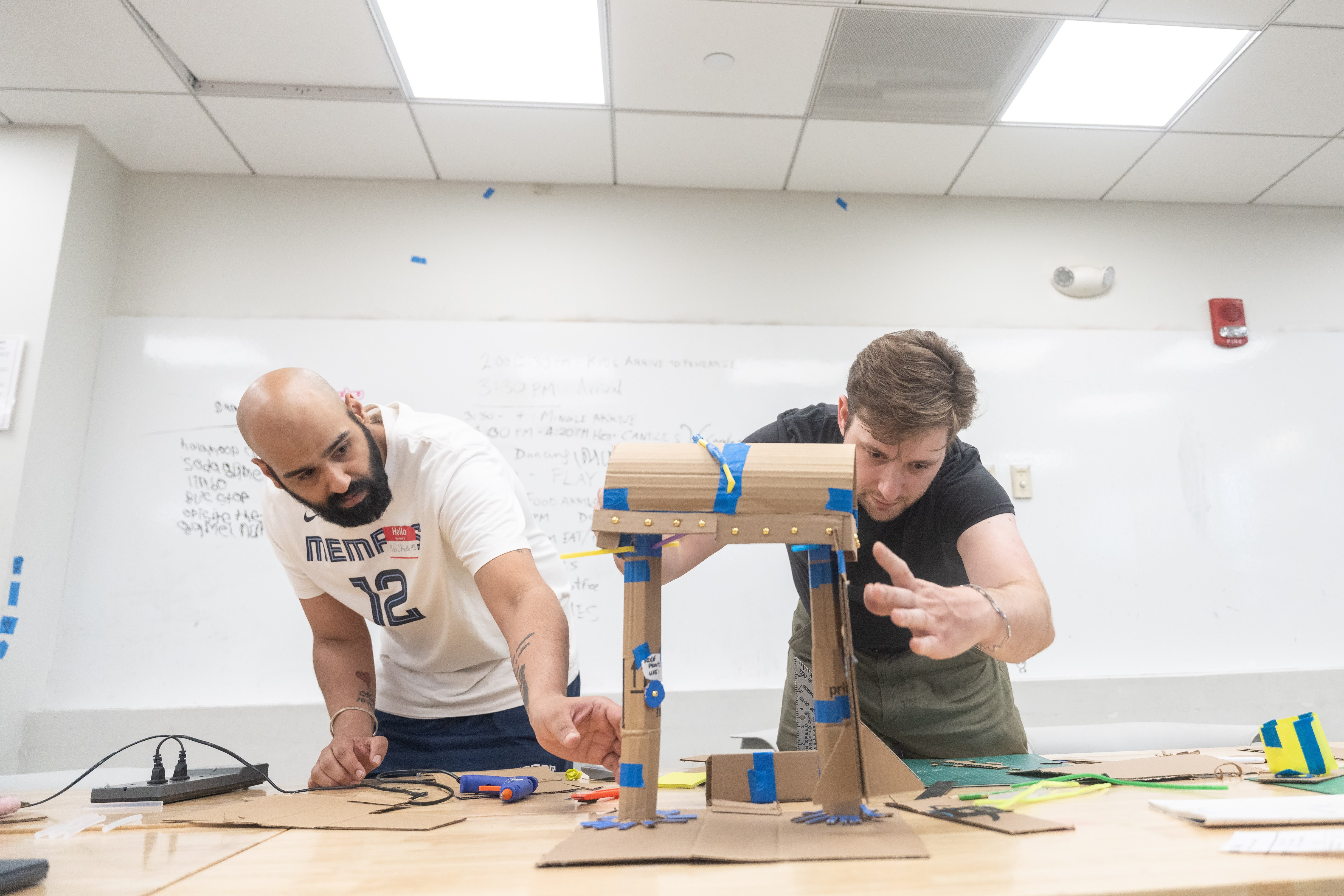
Rather than separating educational theory from practice, NICE weaves them together. Participants learn through making, reflecting, and discussing their experiences as they move through the design challenge.
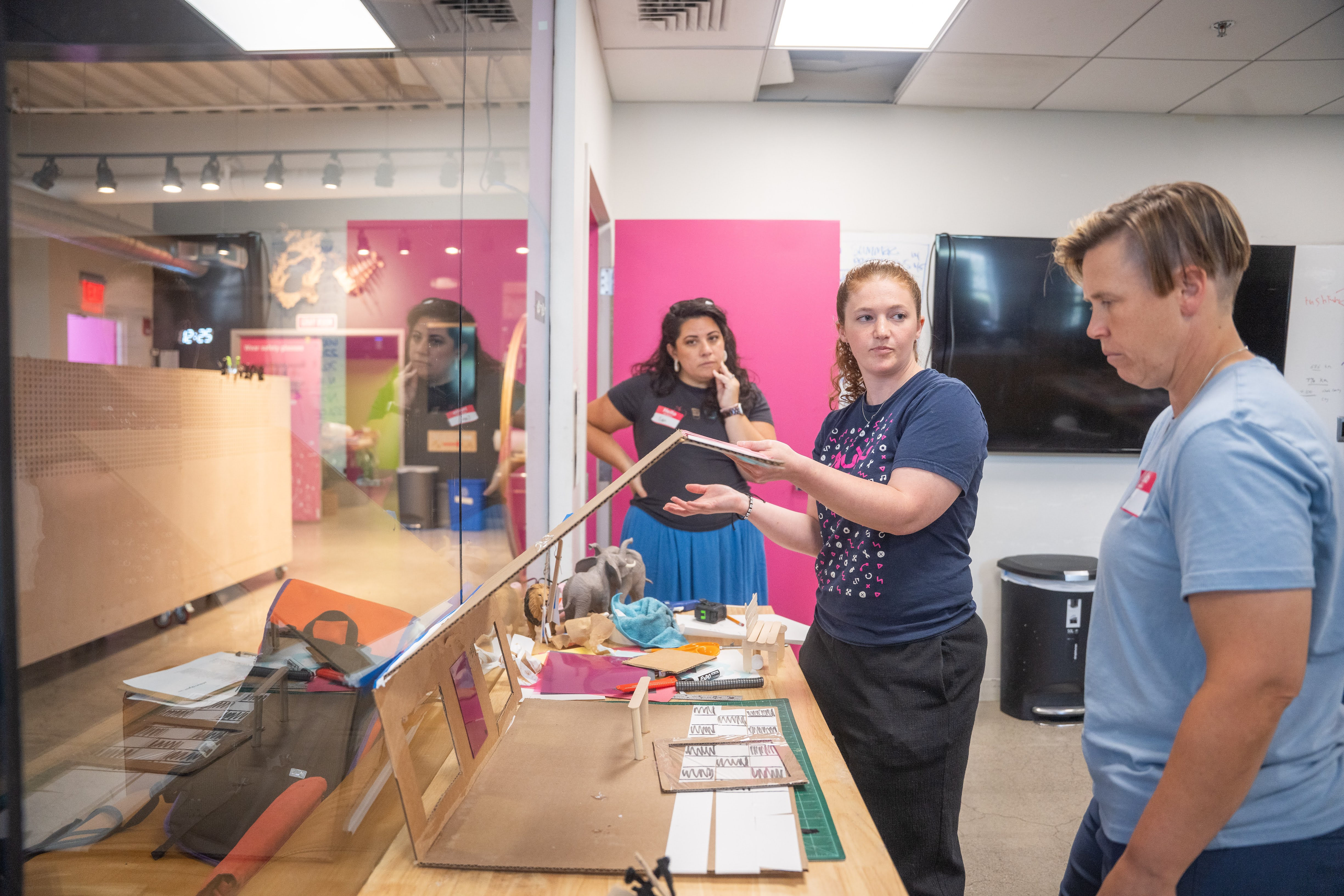
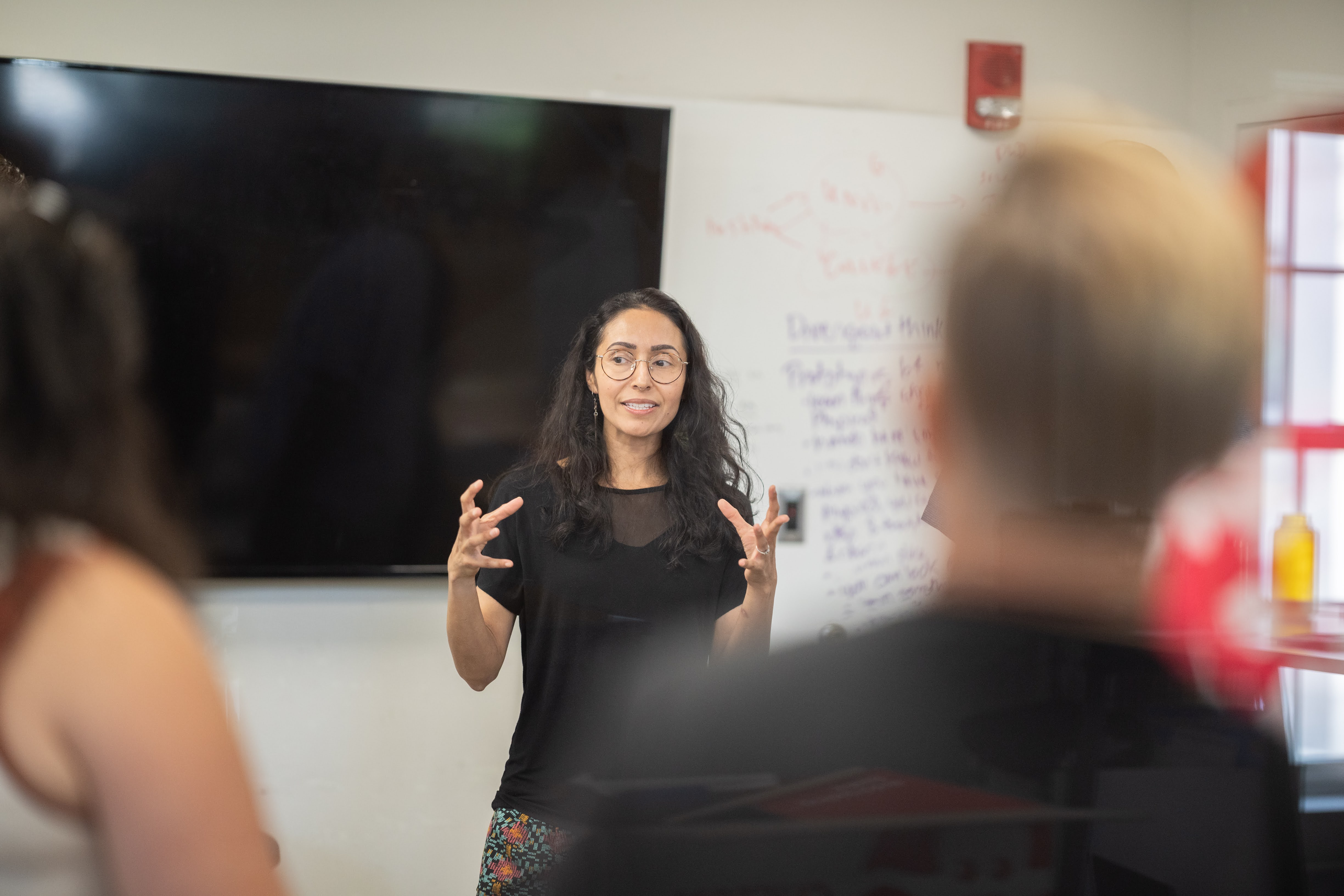
"I always use the analogy of a bus trip," Kate says. "Participants are getting on the bus ride of a design challenge, but we stop at a series of pedagogy and practicum stops along the way." At each stop, participants examine a different phase of the design process and discuss how it can be adapted for their own classrooms.
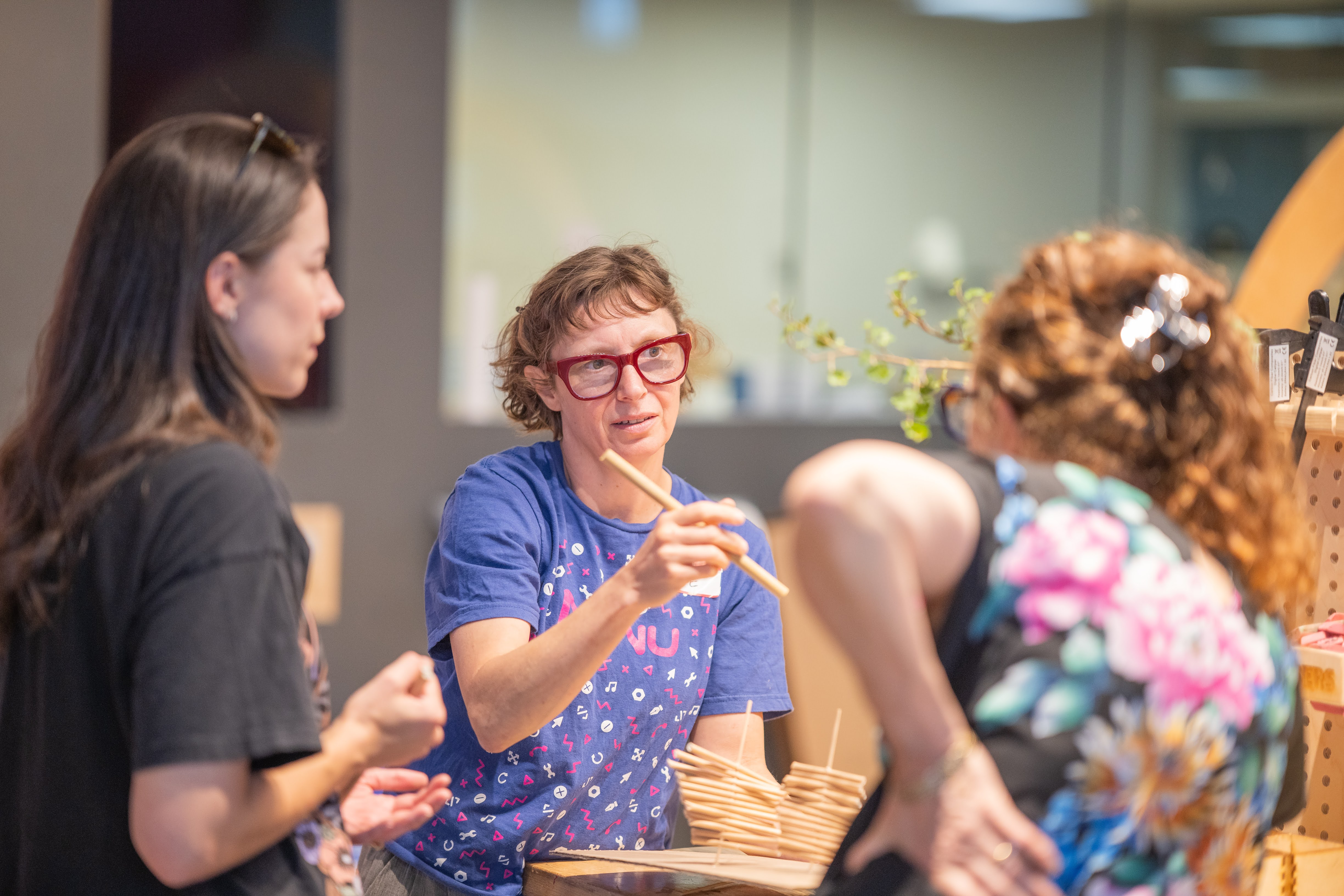
"In this way, we aren't lecturing at teachers," she explains. "We're asking them to be active participants in their cumulative learning throughout the two-and-a-half days."
Kate says asking educators to experience the design process as students helps them understand it at a much deeper level—an experience many find transformative.
While NICE includes skill-building workshops for teachers who may be new to fabrication tools or advanced making techniques, the team has learned that the greatest impact comes from blending practical skills with conceptual thinking. That combination allows participants to build confidence quickly while seeing how design thinking works in action.
Becoming the Student
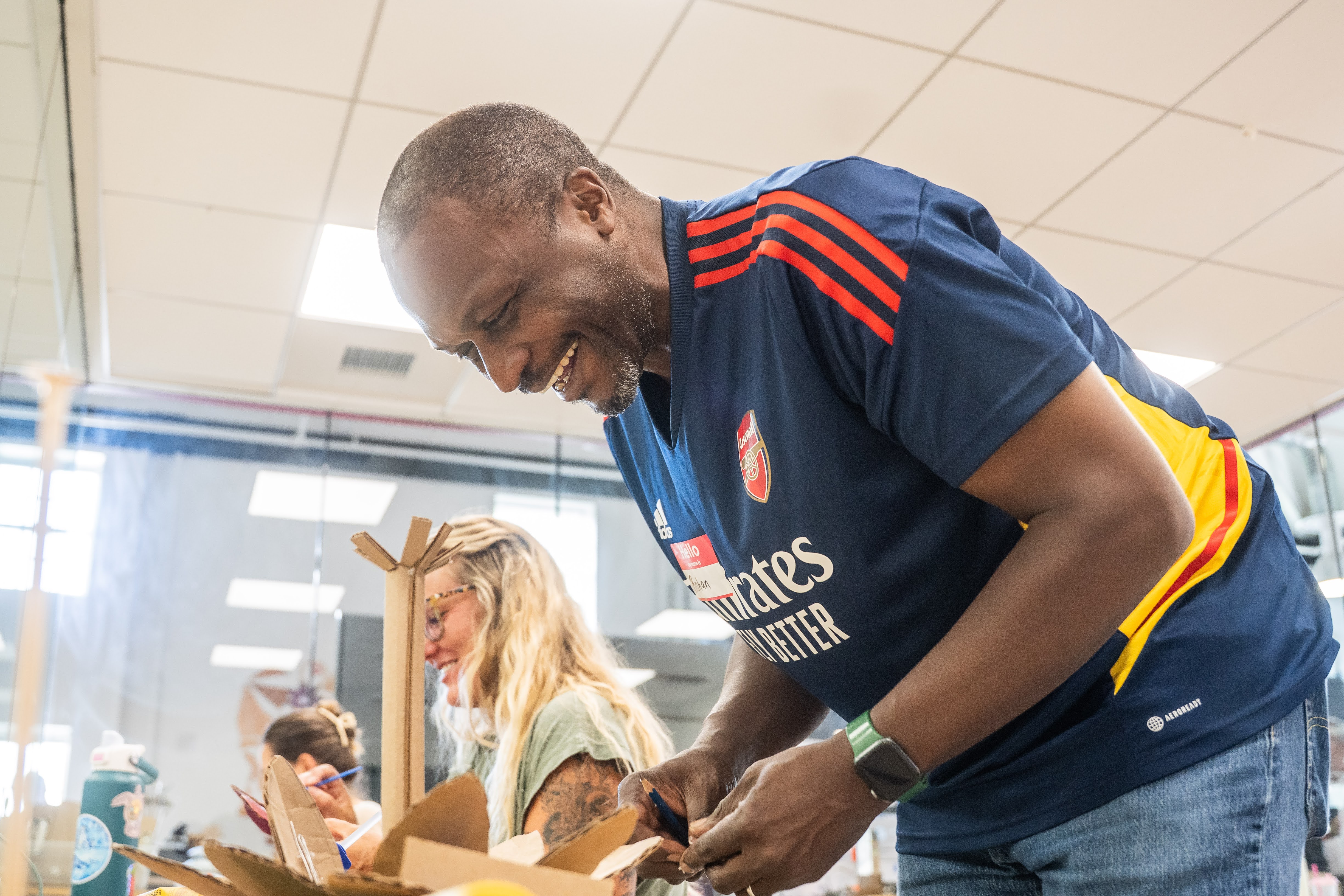
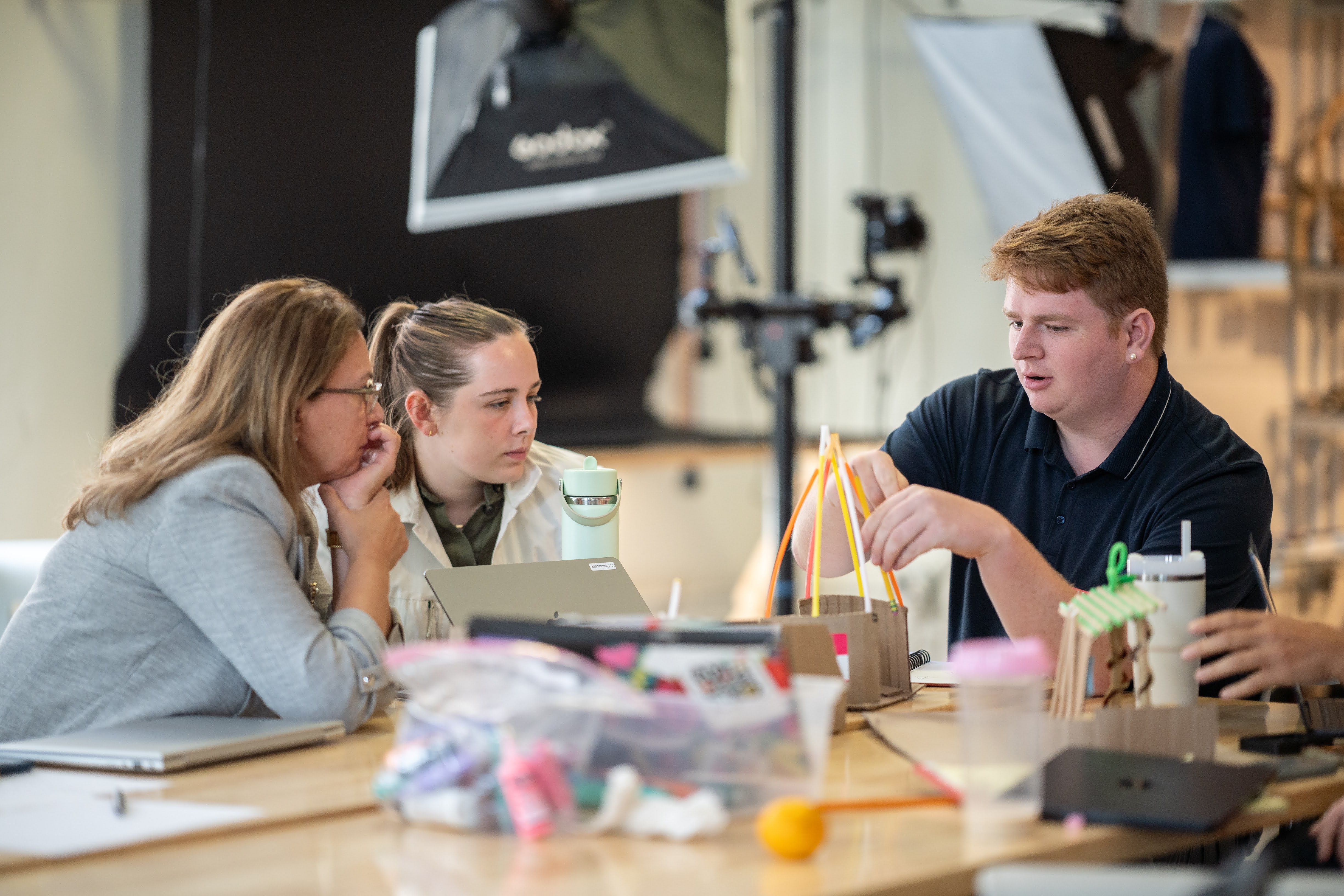
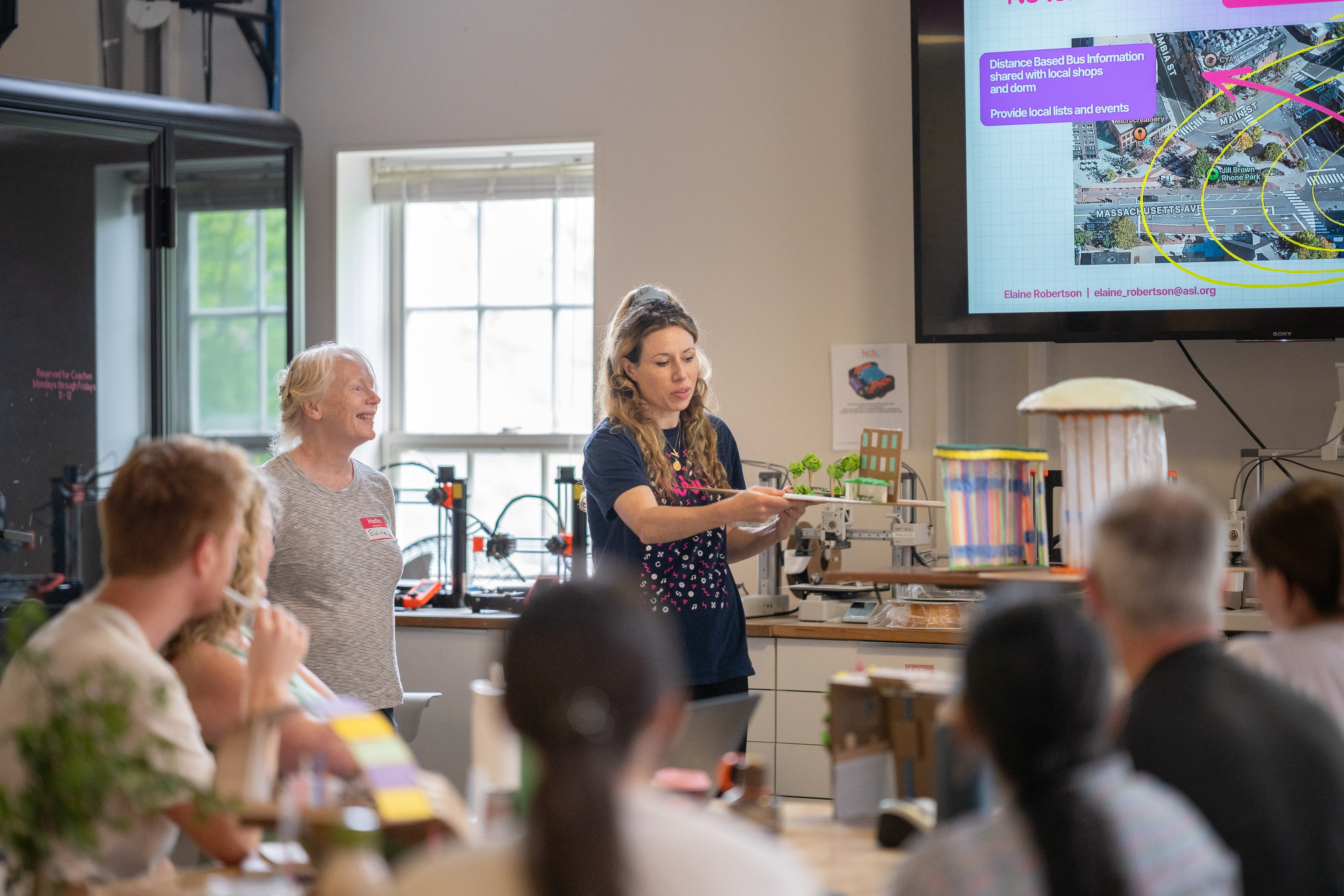
At NICE, educators don't simply hear a lecture about project-based learning—they get to live it. Working in small teams, participants brainstorm, collaborate, prototype, test, and ultimately present solutions to their design challenge.
Joselyn believes that this experience gives educators a more complete understanding of how project-based learning affects their students.
"I feel like it makes them believers in giving students more agency to make innovative, informed decisions," she says. "It also increases empathy. Teachers are often struck by how much they want to shift their own teaching practices after experiencing project-based curriculum from a student's perspective."
One moment, in particular, stands out to her every year.
"My biggest hope is that teachers remember how happy they were to be making things with their hands," she says. "I heard a version of, 'I could do this every day and never get tired of it!' so many times."
Having watched countless NuVu students come alive as they build and iterate on their ideas, Joselyn recognized that same creative energy in this year's participants. "We saw the teachers buzzing with that energy while they were working on their projects," she says. "I hope they bring that back to their classrooms."
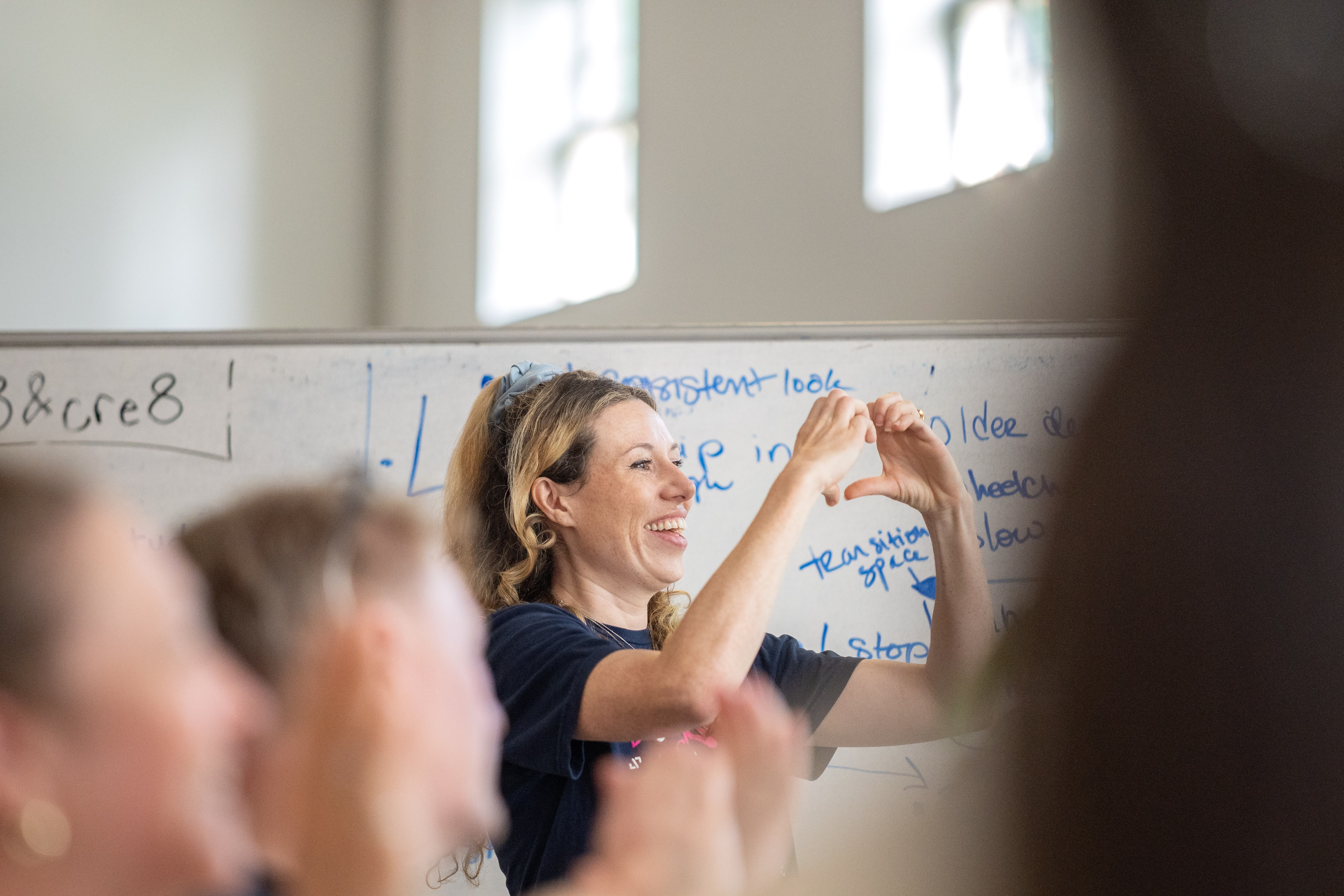
One of Saba's favorite moments from NICE came during the studio's mid-review. While facilitating the session, she witnessed the collaborative culture that had taken shape through the NuVuX design process.
"Teacher teams were enthusiastically offering thoughtful feedback to one another while also embracing feedback on their own work," she recalls. "The energy in the room was incredible. Everyone was genuinely invested in each other's success and excited to see the projects evolve. That's exactly what a classroom should feel like every day.""
When asked what she hopes every participant takes home from NICE, Kate recalls a conversation with one educator that has stayed with her. "A teacher came up to me at the end of NICE and said, 'If I am having this much fun while learning so much at the same time, why wouldn't I want my students to do the same?'"
For Kate, that sentiment captures the purpose of NICE.
"I want teachers to leave believing they can create learning experiences that are deeply engaging and capable of having an enormous impact on students."